Introduction
Hydroxyapatite (HAp) is widely recognized as one of the most important active ingredients in modern oral care formulations, particularly in products for enamel remineralization, tooth sensitivity relief, whitening, and fluoride-free daily care. At the same time, not all HAp powders are structurally identical. Different grades may exhibit significant differences in particle morphology, crystal dimensions, agglomeration behavior, and particle size distribution.
In oral care applications, hydroxyapatite is commonly supplied in rod-shaped, spherical, or irregular nanoparticle forms. These differences are not merely visual or descriptive. They are closely linked to the material’s synthesis route, downstream processing, drying history, and characterization method, and they can influence how the powder is interpreted and evaluated as an oral care raw material.
The morphology of HAp nanoparticles is therefore best understood as a result of how the material is produced. Different production routes, together with specific process controls, can lead to very different particle structures, while different analytical methods may capture those structures at different levels. In this article, we summarize the main production routes for hydroxyapatite powders, with particular emphasis on how synthesis conditions shape powder morphology and how these materials can be characterized in a technically meaningful way.
Main Production Routes for Nano-Hydroxyapatite Powders
Hydroxyapatite powders for oral care applications can be produced through several synthesis routes. Among these methods, wet chemical precipitation remains one of the most widely used approaches for producing nano-hydroxyapatite at commercial scale, particularly for applications in toothpaste, tooth powder, and other remineralizing oral care systems. Other methods, such as hydrothermal synthesis and solid-state routes, are also used in certain contexts, especially when specific crystal structures or processing conditions are desired.
Wet Chemical Precipitation
Wet chemical precipitation is one of the most widely used techniques for the synthesis of hydroxyapatite (HAp). This method relies on the reaction between a calcium source and a phosphate source in an aqueous system under controlled conditions, allowing hydroxyapatite crystals to nucleate and grow in solution or suspension.
The precipitation process typically involves several steps. First, calcium-containing and phosphate-containing reagents are mixed according to the desired HAp stoichiometric ratio. Typical calcium sources include calcium hydroxide, calcium nitrate, calcium acetate, or calcium hydroxide systems derived from calcium oxide, while common phosphate sources include phosphoric acid, ammonium phosphate salts, or other phosphate-containing reagents. The pH of the mixture is then adjusted to a specific value, typically in the alkaline range, and the reaction is carried out at temperatures ranging from room temperature to the boiling point of water. The suspension is subsequently stirred and aged, after which the precipitate is washed, filtered, and dried to obtain the final powder product.
One of the main reasons wet precipitation is so widely used is its combination of chemical flexibility, relatively simple equipment requirements, and scalability. Compared with some more specialized processes, wet precipitation can be adapted to a wide range of hydroxyapatite powder specifications and is particularly suitable for producing fine particles in the nano- to submicron range. For oral care product manufacturers and raw material suppliers, it is also attractive because it offers a relatively high degree of control over purity, particle growth, and production efficiency.
Hydrothermal Synthesis
Hydrothermal synthesis refers to the formation of hydroxyapatite in an aqueous system under elevated temperature and pressure, typically in a sealed autoclave or pressure vessel. In this process, calcium and phosphate precursors react under hydrothermal conditions, where the combined effects of temperature, pressure, and condensation enhance precursor reactivity and promote crystal nucleation and growth. Compared with conventional wet chemical precipitation, hydrothermal treatment generally enables the formation of HAp with higher crystallinity and, in some cases, without the need for further post-treatment. Depending on precursor chemistry, reaction temperature, pH, and reaction time, hydrothermal synthesis can produce HAp powders with a wide range of particle sizes and morphologies, including rod-shaped, granular, and irregular structures. In addition, the use of morphology modifiers such as surfactants or chelating agents can further improve control over particle shape and size during hydrothermal growth.
Solid-State / Dry-State Routes
Solid-state synthesis is a dry-route method in which calcium- and phosphate-containing precursors in solid form are mixed, milled, and subsequently heated to promote the formation of hydroxyapatite. Unlike wet chemical precipitation, this approach relies on solid-state diffusion and high-temperature reaction between the precursor phases to drive HAp formation. Because it does not require an aqueous reaction system or highly precise precipitation control, solid-state processing is generally considered a relatively simple and scalable route for powder production. However, depending on precursor selection and thermal treatment conditions, the process may also lead to the formation of multiple calcium phosphate phases rather than a single pure HAp phase. For this reason, solid-state synthesis is often discussed as a practical bulk powder production route, but one with different phase-control and particle-structure characteristics compared with wet precipitation or hydrothermal methods.
Other Routes Briefly Noted
Other synthesis routes for hydroxyapatite include mechanochemical processing, hydrolysis-based methods, and high-temperature routes. Mechanochemical synthesis typically relies on intensive milling to promote solid-state reactions between calcium- and phosphate-containing precursors, offering a relatively direct route to powder production while also influencing particle size and phase evolution through mechanical energy input. Hydrolysis-based methods generally involve the conversion of calcium phosphate precursor phases into hydroxyapatite in aqueous environments, often under controlled pH and temperature conditions. High-temperature methods, by contrast, use thermal treatment to drive phase transformation and crystal formation, and are more commonly associated with ceramic-type processing or the production of highly crystalline calcium phosphate materials. Compared with wet precipitation, these routes differ not only in reaction mechanism, but also in how they influence crystallinity, phase purity, particle morphology, and agglomeration behavior.
Key Process Controls That Shape HAp Particle Morphology
Wet precipitation does not necessarily produce a single “nano-HAp morphology”. Depending on the process control method, even using the same synthesis route, different powders with short rod-shaped, spherical, or irregular shapes can be generated. Several factors can affect crystal formation. The following summarizes the controlled factors that need to be considered during the production process.
Precursor Chemistry and Ca/P Ratio
The chemistry of the calcium and phosphate precursors is one of the first factors that shapes the precipitation system. The choice of calcium and phosphate sources affects precursor solubility, reaction rate, local supersaturation, and impurity profile, all of which can influence crystal nucleation and growth behavior during precipitation. At the same time, maintaining an appropriate calcium-to-phosphorus ratio is essential for obtaining hydroxyapatite as the desired phase and for reducing the likelihood of forming other calcium phosphate phases.
pH and Alkali Control
pH is one of the most influential parameters in wet HAp synthesis. It affects the precipitation environment, the nucleation rate, and the subsequent crystal growth process. In many industrial systems, alkali is used not merely as a neutralizing reagent, but as an important control tool for stabilizing the reaction environment and steering particle formation.
Reaction Temperature and Aging Time
Reaction temperature and aging time play a central role in determining crystal growth kinetics and crystal maturation. Higher temperatures or longer aging times may improve crystallinity, but they can also promote particle growth or alter agglomeration behavior depending on the system. As a result, these variables are often critical in controlling whether the final powder remains as fine nanoparticles or develops into larger, more strongly aggregated structures.
Addition Strategy, Mixing Conditions, and Morphology Modifiers
The way reactants are introduced into the reactor can influence local concentration gradients and supersaturation, which in turn affects how uniformly particles nucleate and whether crystal growth remains controlled. Mixing conditions therefore play an important role in maintaining a stable precipitation environment. In addition, some wet precipitation systems use additives or morphology modifiers to regulate crystal growth, suppress uncontrolled agglomeration, or promote specific particle shapes such as rod-like structures.
Primary Particles vs. Agglomerated Powder: How To Interpret Particle Size
Primary Particle Morphology by Electron Microscopy
Electron microscopy, particularly transmission electron microscopy (TEM) and scanning electron microscopy (SEM), is one of the most direct methods for evaluating the primary morphology of hydroxyapatite particles. These techniques are commonly used to observe particle shape at the micro- to nanoscale. Rod-shaped, spherical, and irregular HAp particles can be clearly visualized under electron microscopy. In addition to revealing the morphology of individual primary particles, electron microscopy can also be used to determine their microscopic dimension.
Agglomerated Particle Size by Laser Diffraction
Because nano-sized powders possess relatively high surface energy, they tend to agglomerate rather than remain as fully isolated primary particles. For larger bulk powder samples, laser diffraction can therefore be used to evaluate the agglomerated particle size of hydroxyapatite. In this context, the particle size measured by laser diffraction should be understood as the secondary particle size, or agglomerated particle size, of the powder rather than the dimensions of the individual primary particles. Although this value does not describe the primary particle morphology observed by electron microscopy, it still provides useful practical information. In real oral care applications such as toothpaste or mouthwash, HAp powders are dispersed into a formulation medium rather than existing as completely separated single particles. As a result, the agglomerated particle size measured by laser diffraction can still serve as a meaningful reference for understanding powder dispersion behavior in practical systems.
Representative Hydroxyapatite Morphologies for Oral Care Applications
The preceding sections have discussed how synthesis routes, process variables, and characterization methods influence the morphology of hydroxyapatite powders. In commercial oral care applications, these principles are reflected in a variety of particle structures. Representative HAp morphologies include rod-shaped, near-spherical, and irregular particles, each exhibiting distinct structural characteristics under electron microscopy.
Despite these differences in appearance, all of these representative morphologies can be produced through wet chemical synthesis. Rod-shaped and near-spherical HAp are typically prepared by controlled chemical precipitation, whereas eggshell-derived HAp is produced through a modified wet precipitation process in which eggshell serves as the calcium source. Although the precursor materials differ, the fundamental reaction mechanism remains based on the controlled precipitation of hydroxyapatite from calcium and phosphate precursors. The simplified production routes are illustrated below.

Representative examples of these morphologies are summarized below.
| Morphology | Rod-shaped | Near-spherical | Irregular (Eggshell-derived) |
|---|---|---|---|
| Production route | Wet precipitation | Wet precipitation | Eggshell-derived wet precipitation |
| Representative SEM/TEM | 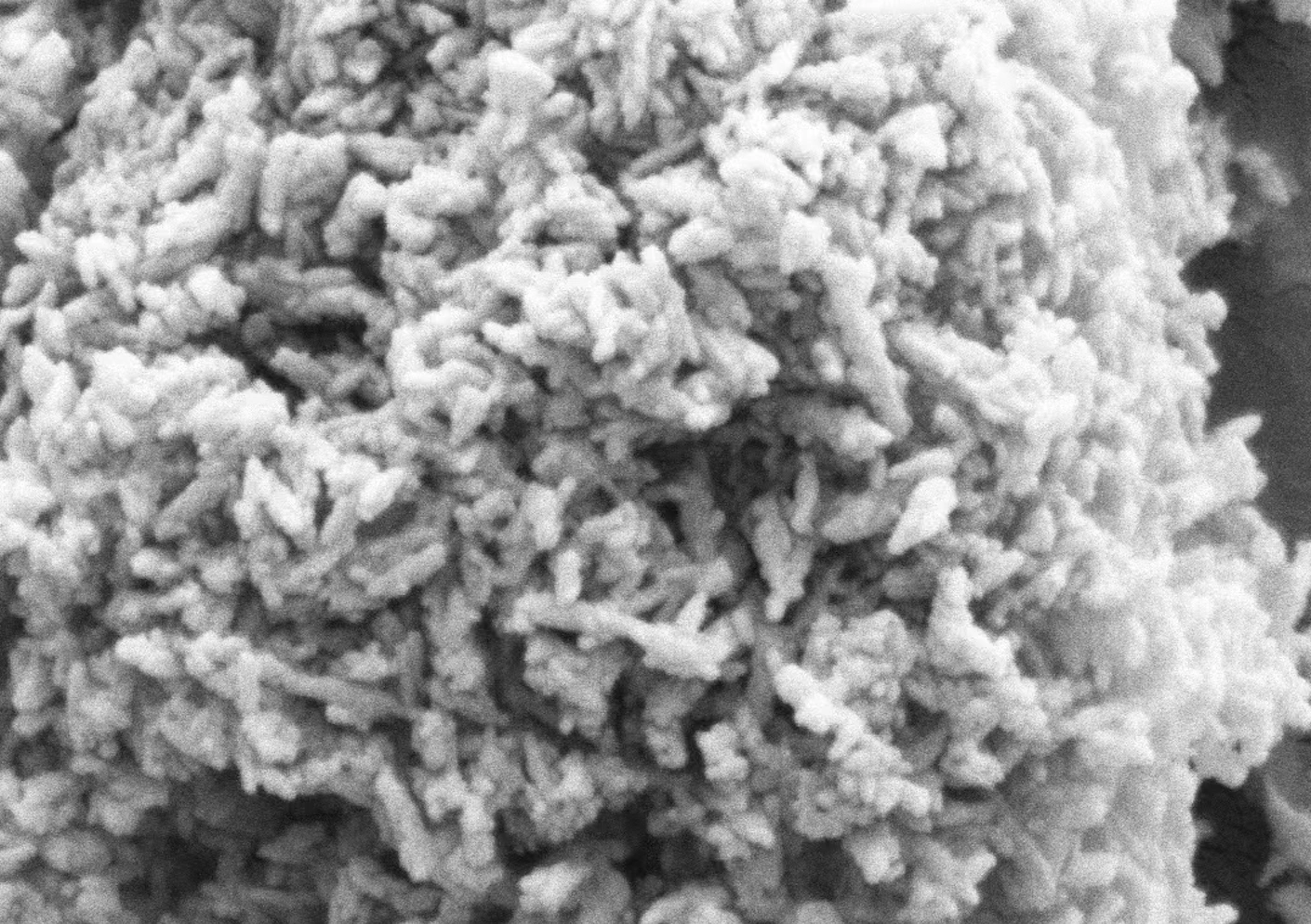 | 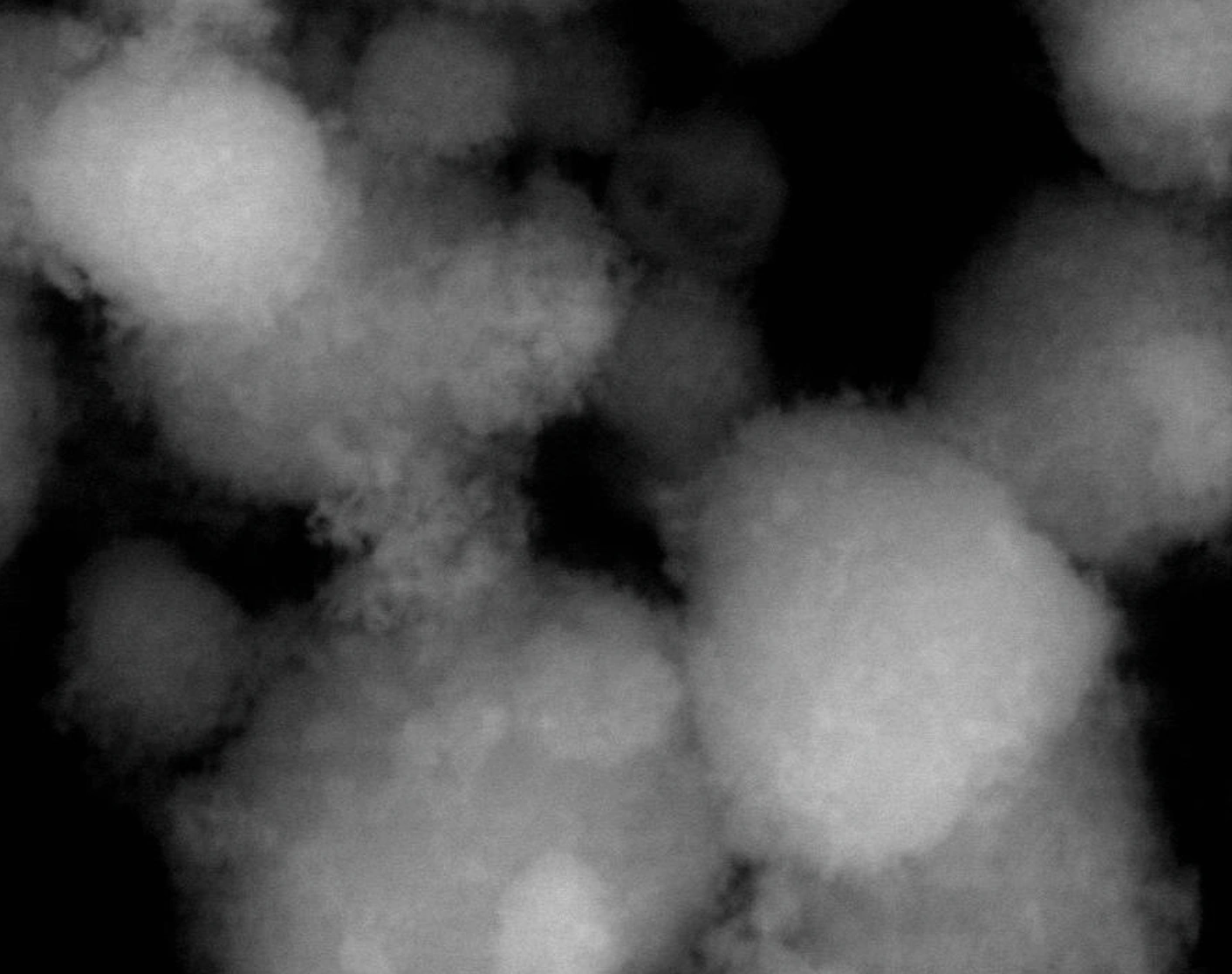 | 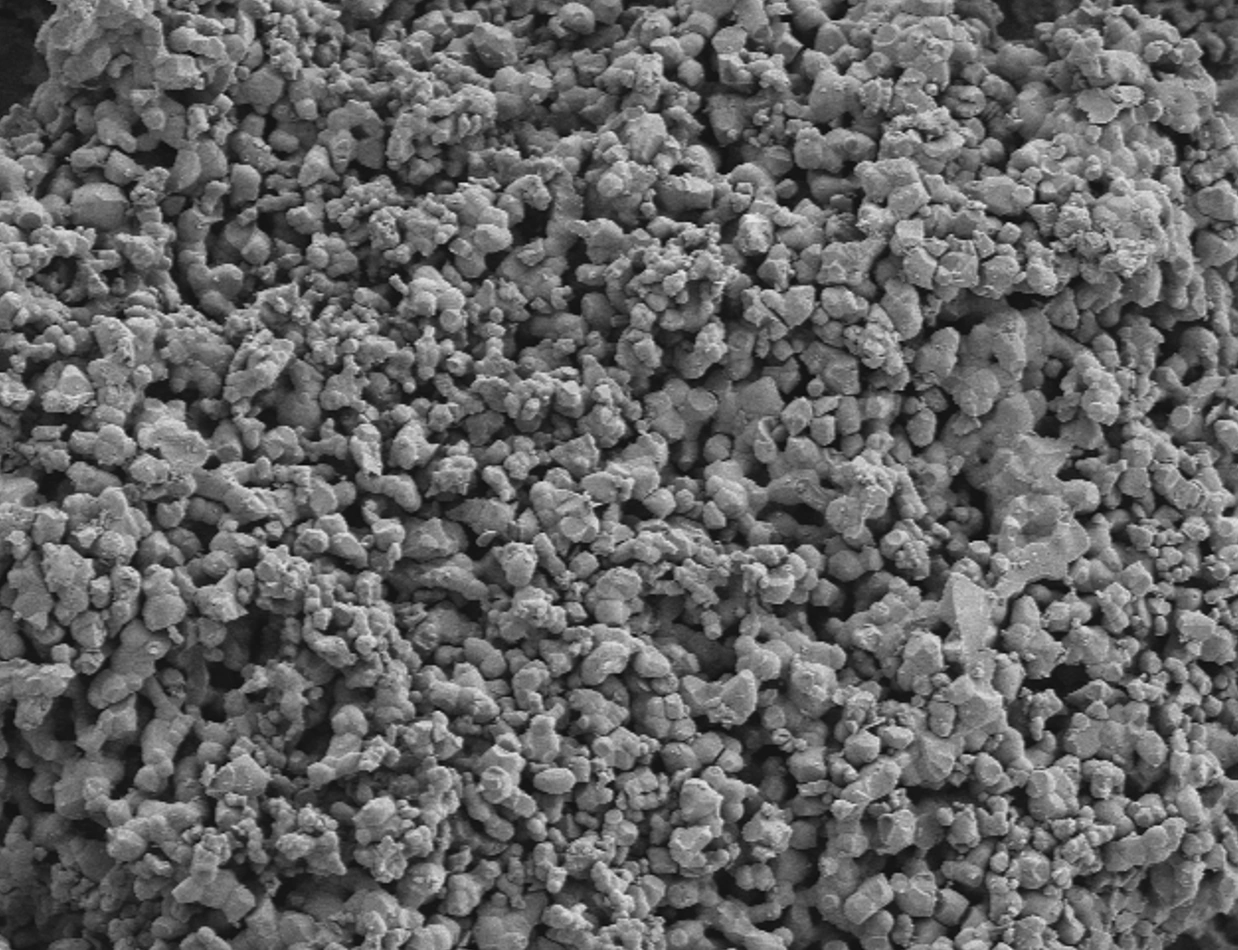 |
Conclusion
Although hydroxyapatite is often discussed as a single material for oral care applications, commercial HAp powders can differ considerably in particle morphology, crystal structure, and agglomeration behavior. These differences are closely related to the synthesis route, process control, and post-treatment conditions used during production.
Equally important is the interpretation of particle characterization data. Primary particle morphology observed by electron microscopy and agglomerated particle size measured by laser diffraction describe different structural levels of the same material and should therefore be considered together rather than independently. By understanding both how hydroxyapatite is produced and how it is characterized, formulators and raw material users can make more informed evaluations when selecting HAp materials for oral care applications.
Reference
Mohd Pu’ad, N.A.S.; Abdul Haq, R.H.; Mohd Noh, H.; Abdullah, H.Z.; Idris, M.I. Synthesis method of hydroxyapatite: A review. Materials Today: Proceedings 2020.
Ferraz, M.P.; Monteiro, F.J.; Manuel, C.M. Hydroxyapatite nanoparticles: A review of preparation methodologies. Journal of Applied Biomaterials & Biomechanics 2004, 2, 74–80.
Cox, S.C.; Walton, R.I.; Mallick, K.K. Comparison of techniques for the synthesis of hydroxyapatite. Bioinspired, Biomimetic and Nanobiomaterials 2015, 4 (1): 37–47.