Key Takeaways
- Enamel remineralization helps restore minerals lost from tooth enamel during everyday acid challenges.
- Hydroxyapatite is a biomimetic mineral that closely resembles the natural composition of tooth enamel.
- Hydroxyapatite can support enamel repair by replenishing minerals and protecting vulnerable tooth surfaces.
- Clinical studies have demonstrated the potential of hydroxyapatite-containing oral care products to strengthen enamel.
- Additional benefits may include dentin hypersensitivity relief and whitening support.
Introduction
Tooth enamel is the hardest tissue in the human body, yet it is constantly exposed to challenges from everyday foods, beverages, and bacterial acids. Throughout daily life, enamel undergoes a continuous cycle of demineralization and remineralization. When acids lower the pH in the oral environment, minerals such as calcium and phosphate can be lost from the enamel surface. Over time, repeated mineral loss may weaken enamel and contribute to the development of early caries lesions, tooth sensitivity, and other oral health concerns.
Fortunately, enamel also possesses a natural ability to repair itself through remineralization. During this process, minerals are redeposited into areas of early enamel damage, helping to restore the integrity and strength of the tooth surface. Supporting this natural repair mechanism has become an important goal in modern preventive dentistry and oral care.
Among the materials used to promote enamel remineralization, hydroxyapatite has attracted significant attention in recent years. As the primary mineral component of human enamel, hydroxyapatite is highly biocompatible and biomimetic. A growing body of research suggests that hydroxyapatite-containing oral care products may help replenish lost minerals, repair early enamel defects, and support overall enamel health.
This article explores the process of enamel remineralization, the factors that influence enamel mineral balance, and how hydroxyapatite may help support the natural repair of tooth enamel.
The Balance Between Demineralization and Remineralization
Tooth enamel is constantly exposed to cycles of mineral loss and repair throughout daily life. When acids produced by oral bacteria or introduced through foods and beverages lower the pH in the mouth, minerals such as calcium and phosphate can dissolve from the enamel surface. This process, known as demineralization, gradually weakens the enamel structure and may contribute to early caries lesions, tooth sensitivity, and surface roughness.
Fortunately, enamel also possesses a natural repair mechanism known as remineralization. Saliva contains calcium and phosphate ions that can be redeposited into areas of early enamel damage, helping to restore lost minerals and maintain enamel integrity. Under healthy conditions, demineralization and remineralization exist in a dynamic balance.
However, natural remineralization has limitations. Frequent acid exposure, poor oral hygiene, reduced saliva flow, and dietary habits can shift the balance toward continuous mineral loss. In addition, the natural remineralization process is often slow and may not fully repair areas that have experienced significant mineral depletion.
For this reason, modern oral care products increasingly incorporate remineralization-promoting ingredients designed to support the natural repair process. Among these materials, hydroxyapatite has attracted particular interest because it closely resembles the mineral composition of human enamel and can directly participate in enamel repair and mineral restoration.
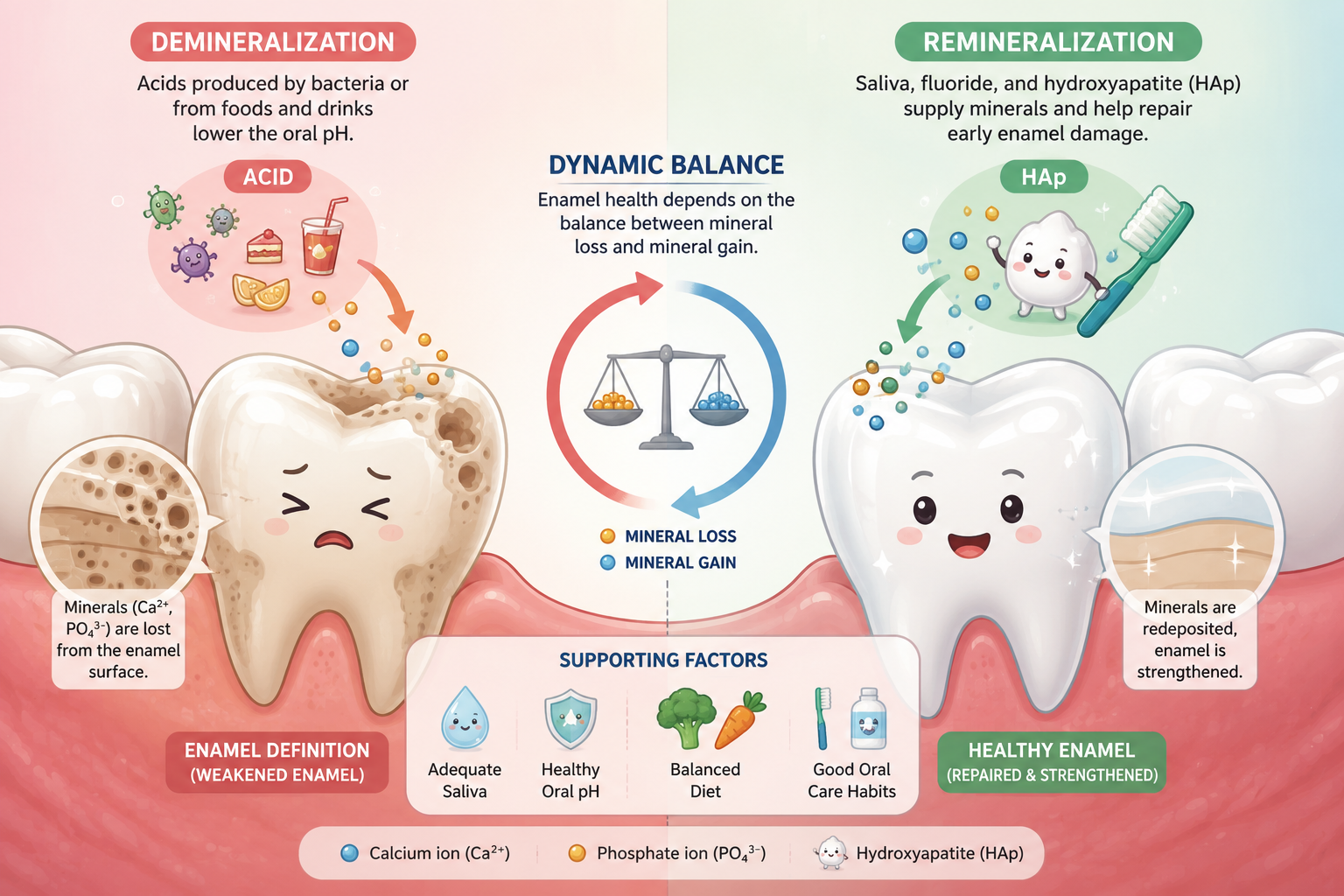
Figure 1. Dynamic Equilibrium Between Enamel Demineralization and Remineralization
How Hydroxyapatite Supports Enamel Remineralization
Biomimetic Composition
Hydroxyapatite is the primary mineral component of human tooth enamel. Because its composition and crystal structure closely resemble those of natural enamel, it can interact effectively with the tooth surface and participate in the remineralization process. In addition, hydroxyapatite shares the same theoretical Ca/P ratio (1.67) as enamel mineral, further contributing to its biomimetic properties.
Mineral Deposition on the Enamel Surface
Hydroxyapatite particles can adhere to the enamel surface and act as a local source of calcium and phosphate. This deposition may help replenish minerals lost during demineralization and create a protective mineral-rich layer.
Repair of Surface Microdefects
Early enamel damage often appears as microscopic defects and porous regions. Hydroxyapatite particles may fill these surface irregularities and support the restoration of enamel integrity.
Supporting Natural Enamel Repair
By combining biomimetic composition, mineral deposition, and surface repair, hydroxyapatite helps support the natural remineralization process and contributes to overall enamel health.
Clinical Evidence and Comparison of Common Remineralization Systems
Tooth enamel is a highly organized mineralized tissue composed predominantly of crystalline hydroxyapatite. Although numerous calcium-phosphate-based materials have been explored for enamel remineralization, these materials differ in crystal phase, Ca/P ratio, stability, and mineralization behavior. Such variations originate from the complex chemistry of phosphate species, which can interact with calcium ions to form multiple calcium phosphate phases under different conditions.
From a biomimetic perspective, materials that more closely replicate the composition and crystal structure of natural enamel may offer distinct advantages for enamel repair. The following table compares several commonly used remineralization systems and highlights their key characteristics.
| Material | Ca/P Ratio | Main Mechanism | Biomimetic Similarity to Enamel | Advantages | Limitations |
|---|---|---|---|---|---|
| Hydroxyapatite (HAp) | 1.67 | Direct mineral deposition and enamel repair | Very High | Chemically similar to enamel, supports remineralization, sensitivity relief, and whitening | Higher formulation cost |
| Fluoride | N/A | Promotes formation of fluorapatite during remineralization | Moderate | Extensive clinical evidence and strong caries-prevention record | Does not directly replace lost enamel minerals |
| Tricalcium Phosphate (TCP) | 1.50 | Supplies calcium and phosphate ions for remineralization | Moderate | Provides mineral ions and is often combined with fluoride | Less structurally similar to enamel; remineralization depends on ion availability |
| Amorphous Calcium Phosphate (ACP) | ~1.50 | Rapid release of calcium and phosphate ions | Moderate–High | High mineral availability and fast ion release | Lower stability and may convert rapidly to other calcium phosphate phases |
Summary of Remineralization Approaches
A variety of materials have been investigated for enamel remineralization, each offering distinct mechanisms and benefits. Fluoride remains one of the most extensively studied ingredients for caries prevention, while calcium-phosphate-based materials such as TCP and ACP primarily function as sources of calcium and phosphate ions to support mineral recovery.
Among these materials, hydroxyapatite is unique because it closely resembles the composition and structure of natural tooth enamel. In addition to supplying minerals, hydroxyapatite can directly interact with the enamel surface and support the repair of early mineral loss. This biomimetic nature has contributed to its growing use in modern oral care products aimed at enamel remineralization, sensitivity relief, and overall enamel protection.
Key Factors Affecting Enamel Remineralization
Oral pH: Creating a Favorable Environment for Remineralization
Enamel remineralization is fundamentally a process of mineral redeposition, in which calcium and phosphate ions are incorporated back into areas of early enamel damage. The efficiency of this process is strongly influenced by the pH of the oral environment.
At neutral or slightly alkaline pH levels, saliva becomes supersaturated with respect to tooth minerals. This supersaturated state provides the thermodynamic driving force for mineral deposition and crystal growth. Under these conditions, calcium and phosphate ions are more readily incorporated into the enamel structure, supporting the natural repair process.
Conversely, when the oral environment remains acidic for extended periods, the deposition of minerals becomes less favorable and the balance shifts away from remineralization. Therefore, successful enamel remineralization depends not only on the availability of calcium and phosphate ions but also on maintaining an oral pH that promotes mineral crystal formation and growth.
Saliva: Nature’s Remineralization System
Saliva plays a central role in the natural remineralization process and is often considered the mouth’s first line of defense against enamel mineral loss. In addition to lubricating oral tissues, saliva serves as a reservoir of calcium and phosphate ions that are necessary for enamel repair.
Saliva also contains buffering systems that help neutralize acids and restore oral pH after meals. As the pH recovers, dissolved minerals can be redeposited into areas of early enamel damage. Individuals with reduced saliva flow, such as those experiencing xerostomia (dry mouth), often face a greater risk of demineralization and dental caries because the protective and remineralizing functions of saliva are diminished.
Although saliva provides a natural mechanism for enamel repair, its remineralization capacity is limited. Modern oral care ingredients, including hydroxyapatite, are increasingly used to supplement the mineral ions naturally present in saliva and help support the remineralization process under everyday conditions.
Conclusion
Enamel remineralization is a natural process that helps restore minerals lost during everyday acid challenges. While saliva plays a central role in maintaining enamel health, modern oral care ingredients can further support this repair mechanism. Among the available remineralization systems, hydroxyapatite has attracted growing interest because of its close similarity to the mineral structure of natural enamel.
By supplying calcium and phosphate, supporting mineral deposition, and helping repair early enamel defects, hydroxyapatite offers a biomimetic approach to enamel care. As research continues to expand, hydroxyapatite is expected to remain an important component of next-generation oral care products aimed at protecting and maintaining long-term enamel health.
Frequently Asked Questions
How long does enamel remineralization take?
Enamel remineralization is a gradual process rather than an immediate repair mechanism. The time required can vary significantly depending on the extent of mineral loss, oral pH, saliva flow, dietary habits, and daily oral care practices.
For individuals with healthy saliva function and consistent use of remineralization-supporting oral care products, early enamel lesions may begin to show signs of mineral recovery within weeks. Maintaining good oral hygiene, limiting frequent exposure to acidic foods and beverages, and following a balanced diet can help create favorable conditions for remineralization and support long-term enamel health.
Does hydroxyapatite replace lost enamel?
Hydroxyapatite may help replenish minerals lost during the early stages of enamel demineralization and support the natural remineralization process. Because hydroxyapatite closely resembles the primary mineral component of tooth enamel, it can interact with the enamel surface and contribute to mineral deposition.
However, hydroxyapatite should not be viewed as a complete replacement for lost enamel. Once significant enamel structure has been permanently lost, it cannot be biologically regenerated. Instead, hydroxyapatite is most effective in supporting the repair of early mineral loss, helping to strengthen and protect existing enamel before more extensive damage occurs.
Scientific References
Background & Mechanisms
Huang SB, Gao SS, Yu HY. Effect of Nano-Hydroxyapatite Concentration on Remineralization of Initial Enamel Lesions In Vitro. Biomedical Materials. 2011;6(3):035007.
Pepla E, Besharat LK, Palaia G, et al. Nano-Hydroxyapatite and Its Applications in Preventive, Restorative and Regenerative Dentistry: A Review of Literature. Annali di Stomatologia. 2014;5(3):108–114.
Remineralization Systems & Material Comparisons
Enax J, Epple M. Overview of Calcium Phosphates Used in Biomimetic Oral Care. Open Dentistry Journal. 2018;12:274–286.
Enax J, Meyer F. Improving Oral Health with Fluoride-Free Calcium-Phosphate-Based Biomimetic Toothpastes: An Update of the Clinical Evidence. Dentistry Journal. 2023.
Clinical Evidence
Limeback H, Enax J, Meyer F, et al. Clinical Evidence of Caries Prevention by Hydroxyapatite: An Updated Systematic Review and Meta-Analysis. Journal of Dentistry. 2025;161:105811.
Paszynska E, Jurga-Karwacka A, et al. Hydroxyapatite in Oral Care: Clinical Evidence and Future Perspectives. Journal of Functional Biomaterials. 2025;16(9):325.