Key Takeaways
- Calcium hydroxyapatite (CaHA) microspheres are a key functional material used in collagen-stimulating aesthetic products.
- CaHA is widely recognized in aesthetic medicine for combining immediate volumization with longer-term collagen stimulation and tissue remodeling.
- Microsphere characteristics such as particle size distribution, morphology, purity, and heavy metal control are important factors in product quality and performance.
- CaHA microspheres are commonly applied in facial contouring, wrinkle correction, skin rejuvenation, and other regenerative aesthetic procedures.
- Growing interest in biostimulatory aesthetics is driving demand for high-quality CaHA microspheres and advanced biomaterial solutions.
Introduction
The medical aesthetics industry has experienced a growing shift from traditional filling approaches toward regenerative treatments that stimulate the body’s natural repair processes. Among the biomaterials used in this field, calcium hydroxyapatite (CaHA) microspheres have gained significant attention due to their ability to provide both immediate volume enhancement and long-term collagen stimulation.
Today, CaHA-based fillers are widely used in facial rejuvenation, contouring, and skin quality improvement. Understanding the properties and functions of calcium hydroxyapatite microspheres is therefore important for researchers, manufacturers, and developers involved in aesthetic medicine.[1]
This article focuses specifically on CaHA microspheres as a material system, with particular attention to their structure, functional role in injectable formulations, and the quality attributes that influence performance in medical aesthetic applications.
What Are Calcium Hydroxyapatite Microspheres?
Definition of hydroxyapatite
CaHA is a calcium phosphate biomaterial with a chemical composition similar to the mineral phase found in human bone and teeth. Due to its excellent biocompatibility and long history of medical use, CaHA has been widely studied in orthopedics, dentistry, and regenerative medicine.
In medical aesthetic applications, however, hydroxyapatite is not used in the form of bulk particles or conventional powders. Instead, it is engineered into carefully controlled microspheres that can be incorporated into injectable formulations. These microspheres serve not only as a volumizing component but also as a scaffold that supports the body’s natural collagen production process.
The performance of CaHA microspheres is influenced by several material characteristics, including particle size distribution, morphology, crystallinity, and purity. Together, these parameters help determine how the material behaves after implantation and how effectively it supports long-term tissue regeneration.
Microsphere Morphology and Structural Characteristics
One of the defining characteristics of medical aesthetic grade calcium hydroxyapatite is its spherical particle morphology.
Unlike irregularly shaped particles, spherical microspheres exhibit smoother surfaces and more predictable behavior during injection. Their geometry allows for improved dispersion within the carrier gel, reduced particle aggregation, and more uniform distribution after implantation. These characteristics contribute to consistent product performance and help support controlled tissue integration.
Particle size is another critical parameter in the design of CaHA microspheres. Commercial aesthetic products typically utilize microspheres within a carefully controlled size range, commonly between approximately 20 and 45 µm. Particles that are too small may be more susceptible to cellular uptake and faster resorption, while excessively large particles can negatively affect injectability and formulation stability.
In addition to the target particle size range, particle size distribution (PSD) is equally important. A narrow and uniform particle size distribution helps ensure consistent suspension behavior, predictable tissue response, and reproducible product performance from batch to batch. Uniform microspheres are also less likely to segregate during processing or storage, which is particularly important for injectable formulations.
Beyond morphology and particle size, several additional material characteristics also contribute to overall product quality. These include crystallinity, density, phase purity, and trace impurity control. Crystallinity, in particular, influences the structural stability of hydroxyapatite and may affect its degradation behavior over time. Other factors such as heavy metal content and manufacturing consistency are likewise important considerations for medical aesthetic applications and will be discussed in later sections.
How Do Calcium Hydroxyapatite Microspheres Work?
The biological mechanism of CaHA microspheres has been extensively investigated through studies of commercially available CaHA-based fillers, particularly Radiesse®. While formulation details may vary among products, the fundamental tissue responses associated with CaHA microspheres are generally considered to follow similar biological principles. In commercial fillers, these microspheres are typically suspended in a carrier gel, but the microspheres themselves remain the key functional particulate component responsible for long-term biostimulatory activity.[4]
Structural Support and Volume Restoration
Following injection, the carrier gel provides an immediate volumizing effect by occupying space within the treated tissue. This initial correction is responsible for the visible improvement observed immediately after treatment.
At this stage, the CaHA microspheres primarily function as suspended structural components within the gel matrix.
Cellular Response and Tissue Integration
As the carrier gel gradually dissipates, the CaHA microspheres remain within the tissue and interact with the surrounding biological environment.
Studies have shown that the presence of CaHA microspheres can stimulate fibroblast activity and support the formation of extracellular matrix components. Rather than acting solely as a passive filler, the microspheres serve as a scaffold that promotes tissue integration and cellular remodeling.
Collagen Stimulation and Tissue Remodeling
Over time, fibroblast activation contributes to the production of new collagen fibers, including both collagen type I and collagen type III. Additional extracellular matrix components such as elastin may also be generated during the remodeling process.
This gradual tissue regeneration is considered one of the defining characteristics of CaHA-based aesthetic treatments. As newly formed collagen replaces the volume initially provided by the carrier gel, the aesthetic effect can be maintained beyond the lifespan of the original formulation.
For this reason, CaHA microspheres are often classified as biostimulatory materials rather than conventional fillers, reflecting their ability to support the body’s natural regenerative processes.
Common Medical Aesthetic Applications
The versatility of CaHA microspheres and their ability to promote both immediate and long-term aesthetic outcomes have made them one of the most widely studied biomaterials in modern aesthetic medicine.
Common applications include facial contouring, cheek augmentation, jawline enhancement, chin projection, correction of deeper facial folds, and hand rejuvenation. In addition to volume restoration, collagen stimulation can contribute to broader improvements in skin appearance. Increased extracellular matrix production may support enhanced skin texture, elasticity, and dermal density over time. Due to these combined functional properties, CaHA microspheres have been incorporated into a wide range of aesthetic procedures.[1,3]
Why Quality Control Matters for Calcium Hydroxyapatite Microspheres
The performance of CaHA microspheres is influenced not only by their chemical composition but also by a range of physical and structural characteristics. Parameters such as particle morphology, particle size distribution, crystal structure, and material purity can all contribute to the behavior of CaHA-based formulations during manufacturing and after implantation.
For this reason, quality control plays an important role in the development and production of medical aesthetic grade CaHA microspheres.
Particle Morphology
Particle morphology is one of the most visually recognizable quality attributes of CaHA microspheres. In medical aesthetic applications, spherical particles are generally preferred because they exhibit more predictable behavior during formulation, injection, and tissue integration.
Compared with irregularly shaped particles, spherical microspheres typically provide improved flow characteristics and more uniform distribution within the carrier matrix. Consistent morphology may also contribute to improved product reproducibility and batch-to-batch consistency.
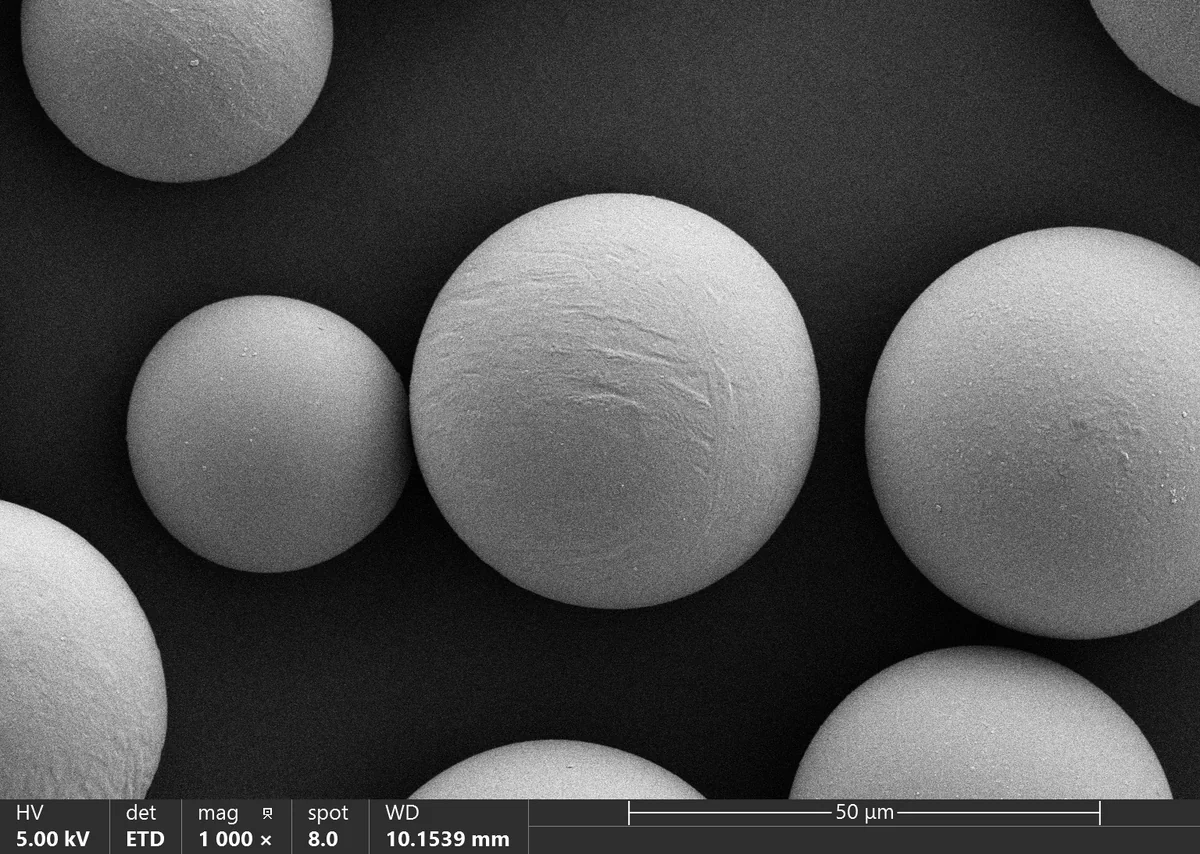
Figure 1. Representative SEM micrograph of CaHA microspheres showing spherical morphology, smooth surface topology, and narrow size variability.
Particle Size Distribution
In addition to particle shape, particle size distribution (PSD) is a critical parameter for injectable biomaterials.
Medical aesthetic CaHA microspheres are typically manufactured within a carefully controlled particle size range. A narrow and uniform size distribution helps support consistent suspension behavior, injectability, and tissue response. Excessively broad particle size distributions may lead to variability in formulation performance and long-term biological behavior.
Particle size analysis is therefore commonly used as part of routine quality control to verify manufacturing consistency and confirm that microspheres remain within the desired specification range.
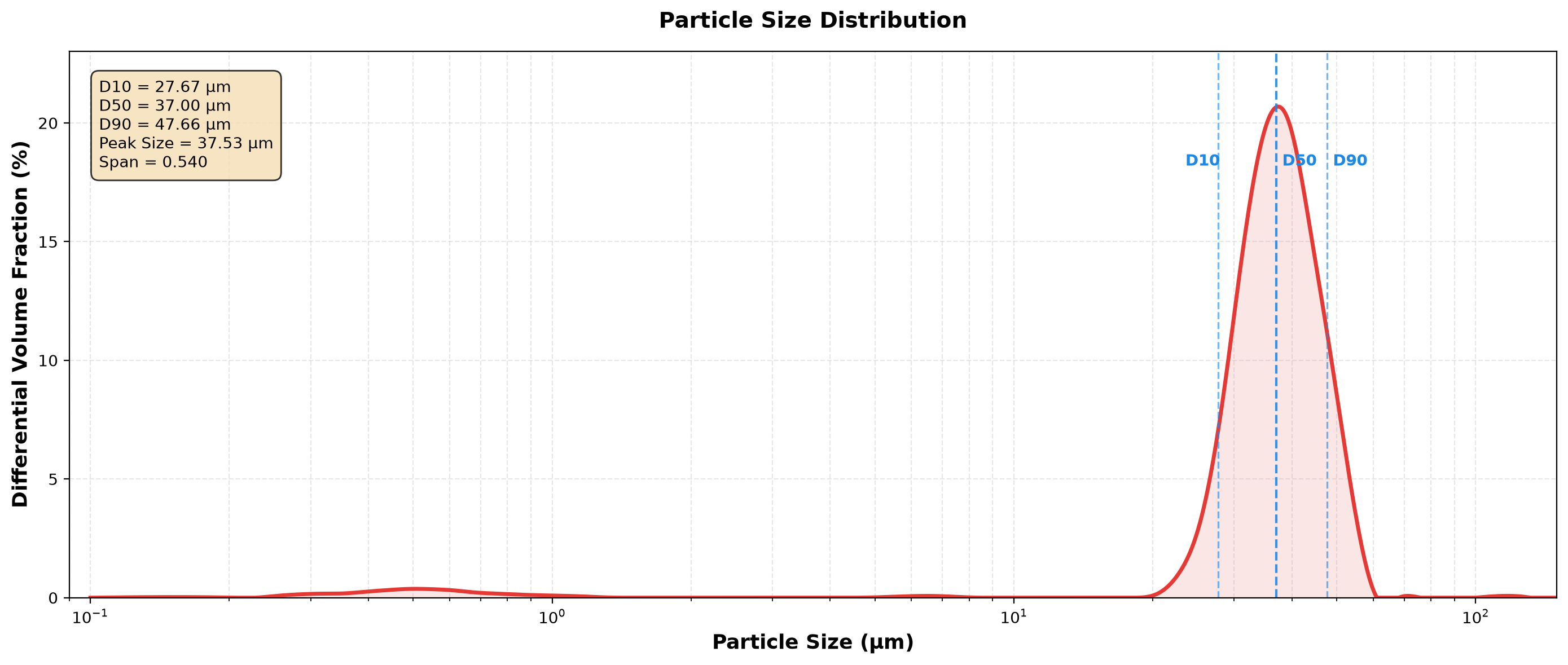
Figure 2. Representative particle size distribution of calcium hydroxyapatite microspheres. The microspheres exhibit a narrow particle size distribution with D10 = 27.67 µm, D50 = 37.00 µm, and D90 = 47.66 µm. The calculated Span value of 0.54 indicates excellent particle size uniformity and manufacturing consistency. A narrow distribution is important for maintaining predictable suspension behavior, injectability, and reproducible performance in medical aesthetic formulations.
Crystal Structure and Crystallinity
The crystal structure of hydroxyapatite is another important material characteristic that can influence product performance.
X-ray diffraction (XRD) analysis is commonly used to evaluate phase composition and crystallinity. A well-defined hydroxyapatite crystal structure can contribute to material stability and structural integrity. Crystallinity is often associated with the degree of crystal development within the material and may influence properties such as hardness, dissolution behavior, and degradation rate.
Although optimal specifications may vary depending on the intended application, maintaining consistent crystal characteristics is an important aspect of quality control for CaHA microspheres.
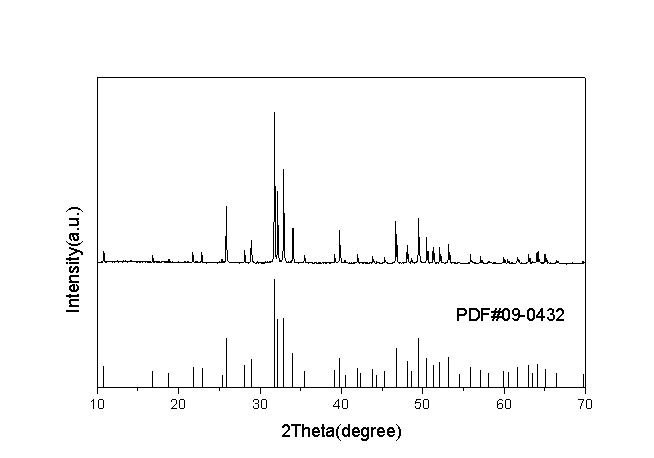
Figure 3. Representative XRD pattern of CaHA microspheres showing the characteristic diffraction peaks of crystalline hydroxyapatite.
Safety and Biocompatibility of CaHA Microspheres
CaHA is considered a highly biocompatible bioceramic because of its close similarity to the mineral phase of human bone and teeth. In aesthetic applications, CaHA is valued not only for its volumizing effect, but also for its regenerative potential. Published studies suggest that CaHA-based formulations can support extracellular matrix remodeling, including stimulation of collagen types I and III, elastin, and proteoglycan production, as well as new tissue and vascular formation. These biological effects help explain the visible improvements in skin firmness, elasticity, hydration, and texture reported after CaHA-based treatments.[2,4]
At the same time, the biocompatibility of injectable CaHA microspheres depends on more than composition alone. Once CaHA is formulated as an injectable particulate system, biological performance is also influenced by particle size, morphology, surface smoothness, purity, and batch consistency. Literature on injectable microspheres shows that smooth, spherical particles are generally associated with a milder tissue response than irregular or rough particles, which are more likely to trigger macrophage activation and foreign body giant cell formation. Fine particles are another important consideration, since excessively small fractions may be more readily phagocytosed and potentially transported away from the implantation site. From a clinical perspective, this means that the safety of a CaHA-based injectable is determined not only by the biocompatibility of hydroxyapatite as a biomaterial, but also by how the microspheres are engineered, processed, and formulated for in vivo use.[5]
For this reason, the safety of CaHA microspheres should be understood as the combination of intrinsic material biocompatibility and careful microsphere engineering. Commercial CaHA-based fillers provide a practical example of this principle: their clinical performance depends not only on the favorable biological profile of CaHA itself, but also on controlled particle size, spherical morphology, formulation stability, and overall product design. In medical aesthetic applications, a well-designed CaHA microsphere system should therefore combine the regenerative advantages of hydroxyapatite with tight control over particle structure, impurity profile, and manufacturing consistency.
Future Trends in CaHA-Based Aesthetic Materials
Current aesthetic practice is already moving beyond simple volumization toward regenerative treatment concepts that emphasize skin quality, collagen remodeling, and natural-looking rejuvenation. In this context, CaHA is increasingly being viewed not only as a structural filler component, but as a biomaterial platform for long-term tissue support.
One important trend is the growing demand for more precisely engineered microspheres. As the field becomes more sophisticated, clinicians and product developers are paying closer attention not only to the presence of CaHA in a formulation, but also to the quality of the microspheres themselves. Parameters such as particle size distribution, spherical morphology, surface smoothness, crystallinity, and impurity control are likely to play an increasingly important role in how next-generation products are evaluated. Better-controlled microsphere systems may help improve injectability, tissue integration, consistency of biological response, and overall predictability in clinical performance.
Another emerging direction is the broader use of CaHA in combination-oriented or multimodal regenerative strategies. Rather than functioning solely as a standalone filler, CaHA may increasingly be incorporated into treatment concepts that combine biostimulation, skin quality improvement, structural support, and long-term tissue remodeling. This may include new formulation approaches, more tailored carrier systems, and optimized microsphere designs for different anatomical areas or aesthetic indications. As regenerative aesthetics continues to evolve, the role of CaHA may expand from a classic contouring material to a more versatile platform for tissue-supportive injectable therapies.
Sustainability of performance is also likely to remain a key focus. In aesthetic practice, there is increasing interest in treatments that produce gradual, durable, and biologically integrated results rather than short-lived correction alone. Because CaHA is both a structural and regenerative biomaterial, future product development will likely continue to emphasize the balance between immediate correction, controlled biodegradation, and long-term tissue remodeling. In this setting, the quality of the microsphere system becomes central: a CaHA product is no longer judged only by whether it contains hydroxyapatite, but by how effectively its particles are designed to behave in vivo over time.
Overall, the future of CaHA-based aesthetic materials will likely be shaped by a combination of biomaterial science, microsphere engineering, and regenerative treatment philosophy. As the market moves toward more refined and biologically driven aesthetic outcomes, well-characterized CaHA microspheres with high purity, controlled morphology, and reproducible performance are expected to remain an important foundation for next-generation injectable products.
Conclusion
Calcium hydroxyapatite microspheres represent more than a conventional filler material. As a biomimetic calcium phosphate bioceramic, CaHA combines immediate structural support with the ability to stimulate long-term tissue remodeling, making it one of the most distinctive materials in regenerative aesthetics. Its applications extend across facial contouring, volume restoration, skin quality improvement, and other treatment areas where both support and biostimulation are clinically valuable.
At the same time, the performance of CaHA in medical aesthetic applications depends not only on the inherent biological advantages of hydroxyapatite, but also on how the material is engineered at the microsphere level. Particle size distribution, spherical morphology, crystallinity, surface quality, purity, and batch-to-batch consistency all contribute to injectability, tissue response, local retention, and the overall safety profile of the final formulation. In this sense, CaHA microspheres should be understood not simply as a raw material, but as a carefully designed particulate system whose quality directly affects clinical behavior.
As demand for biostimulatory and regenerative treatments continues to grow, CaHA-based materials are likely to remain highly relevant in the future of aesthetic medicine. The continued advancement of this category will depend on a deeper integration of biomaterial science, manufacturing control, and formulation design. For researchers, formulators, and product developers, understanding CaHA microspheres means looking beyond hydroxyapatite as a chemical composition alone and evaluating the microsphere system as a whole—including particle engineering, quality control, formulation behavior, and long-term biological response.
References
Ghasemi, S.; Taban, M.; Goldust, M.; et al. Calcium Hydroxylapatite (CaHA) and Aesthetic Outcomes: A Systematic Review of Controlled Clinical Trials. Journal of Clinical Medicine 2024, 13, 1540.
Wollina, U.; Wiegand, C.; Hipler, U.-C. Calcium Hydroxylapatite Microspheres – Biocompatibility and Clinical Effects. Georgian Medical News 2018, 278, 62–68. PMID: 29905547.
Guida, S.; Galadari, H. A systematic review of Radiesse/calcium hydroxylapatite and carboxymethylcellulose: evidence and recommendations for treatment of the face. International Journal of Dermatology 2024, 63(2), 150–160.
Aguilera, S.B.; McCarthy, A.; Khalifian, S.; Lorenc, Z.P.; Goldie, K.; Chernoff, W.G. The Role of Calcium Hydroxylapatite (Radiesse) as a Regenerative Aesthetic Treatment: A Narrative Review. Aesthetic Surgery Journal 2023, 43(10), 1063–1090.
Lemperle, G.; Morhenn, V.; Pestonjamasp, V.; Gallo, R.L. Biocompatibility of Injectable Microspheres. Journal of Cosmetic Dermatology 2004, 3(1), 12–19.